photo-developpeur-freelance · 8 min
Freelance developer photo: look credible on GitHub and LinkedIn
GitHub, LinkedIn, portfolio: the right freelance developer photo should signal reliability, clarity, and collaboration, not a staged tech persona.

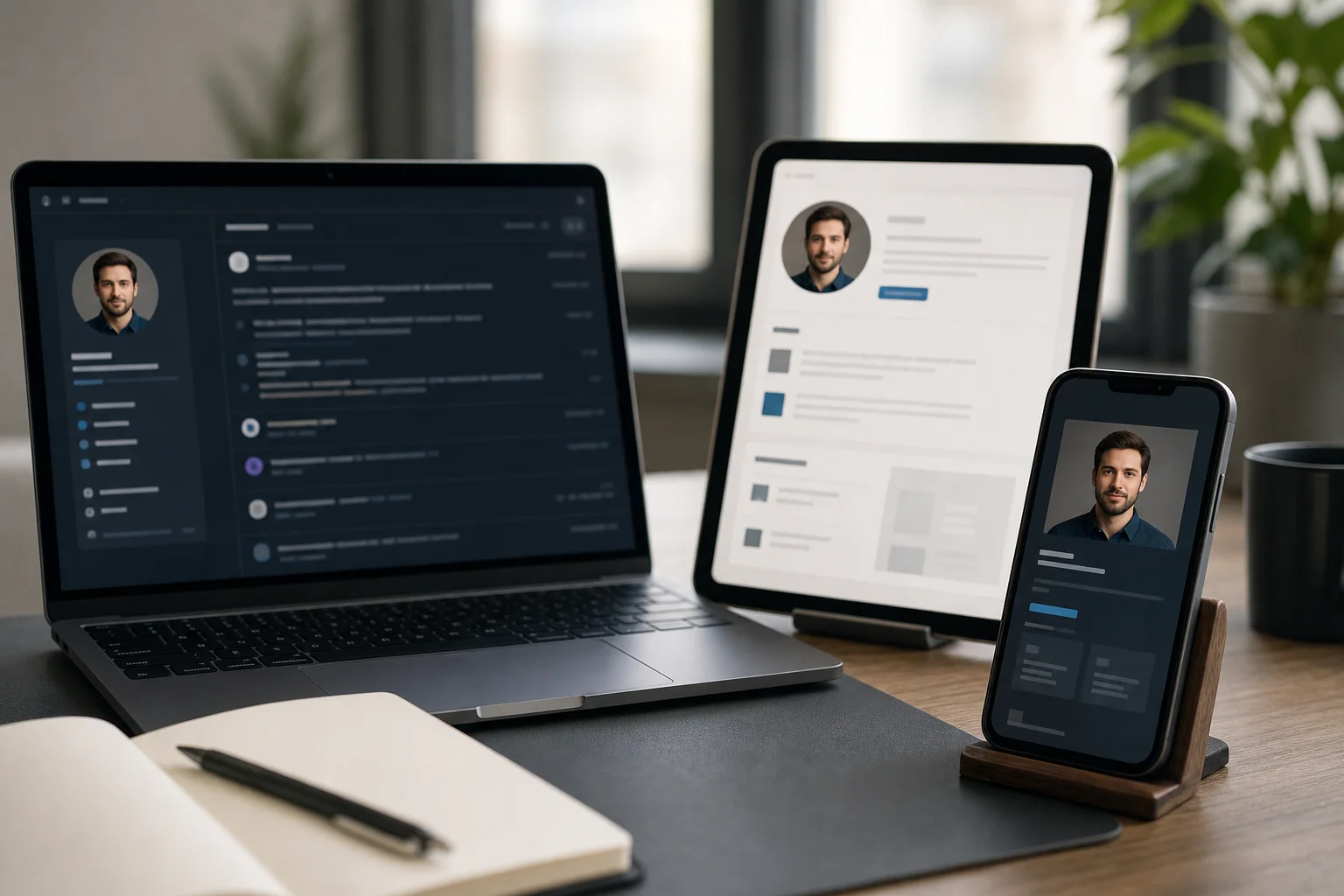
A freelance developer does not need a photo that screams "tech." They need one that says, in a second: clean code, easy communication, reliable delivery. Across GitHub, LinkedIn, and a portfolio site, the right portrait reassures a CTO or founder before they even open your README, profile, or proposal.
GitHub proves the work. The photo sets the human friction level. Too corporate and you look more sales than build. Too gamer-coded and you feel locked inside your setup. Too artsy and the role gets blurry. The right middle ground is a current, readable face that stays recognizable at thumbnail size and matches the surfaces where clients judge you.
Why does the photo matter if GitHub already shows the work?
The "my code is enough" reflex makes sense, but it misses part of the buying decision. A client is not only paying for code output. They are also buying collaboration rhythm, clarity in async messages, ease in video calls, and perceived seniority. GitHub shows repositories, contribution history, and sometimes a public profile README. LinkedIn gives business context. Your website shows positioning. The photo is what ties those three layers together. If it sends the opposite signal, it creates doubt before the first conversation.
LinkedIn says a complete, representative profile improves discoverability and helps other members understand your professional personality. GitHub, meanwhile, explains that your profile picture helps identify you across pull requests, comments, contribution pages, and graphs. Even in a deeply technical environment, the face is still part of navigation and trust.
Which visual codes work for a freelance developer?
The right visual code depends less on your stack than on the type of mission you want. A freelancer selling product sprints to a scale-up does not need exactly the same register as someone doing legacy modernization for an enterprise. But the logic stays the same: calm, precise, current, never theatrical.
| Surface | What the client checks | Strong photo signal | Typical mistake |
|---|---|---|---|
| GitHub | seriousness, continuity, identity | simple avatar, readable, close to real face | abstract avatar, logo, or meme |
| business context, seniority, contactability | sharp portrait, restrained outfit, direct gaze | overly polished corporate shot | |
| Portfolio | mission style, clarity, personality | consistent variation of the same person | hero image that steals attention from the work |
GitHub: stay identifiable without over-branding yourself
GitHub is not a brochure. It is a fast-scanning environment where your avatar mainly needs to identify you inside issues, reviews, lists, and commits. A dark, tiny, or over-stylized portrait collapses at small size. The strongest option is often the simplest one: head-and-shoulders crop, soft light, clean background, neutral or lightly open expression. No need for a blazer. No need for a forced "developer" prop either.
This matters even more for freelancers. If GitHub shows a logo while LinkedIn shows a face, you split yourself into two identities. For a client moving from one platform to the next, that break slows trust down. In most cases, keeping the same face on GitHub and LinkedIn, then using a slightly different crop or mood on the portfolio, is enough.
LinkedIn: polished enough for budget talks, simple enough for standups
On LinkedIn, you are no longer evaluated only as a builder. You are evaluated as a project partner. That means the photo can move slightly upward in formality, but it should not drift into "enterprise sales director." A plain shirt, premium tee under an overshirt, lightweight knit, or soft jacket all work if they resemble what you would actually wear in a client call.
For most freelance developers, the most believable register is restrained and human: neutral background or soft office, natural light, direct gaze, relaxed mouth, no showroom smile. The implicit message should be clear: "I can talk product and technical debt without ego or folklore." If your targets are CTOs, PMs, and founders, that lands better than a hyper-polished portrait that feels overly commercial.
What should the portfolio add on top of GitHub and LinkedIn?
The portfolio should not repeat LinkedIn exactly. It should show the same professional in a slightly more editorial setting. That is where you can allow a wider frame, more room tone, a calmer workspace, or a stronger sense of environment. But the photo still serves the work, not the other way around.
Nielsen Norman Group has long observed that users pay attention to information-carrying images and ignore decorative ones. For a developer portfolio, that matters a lot. A useful photo shows a real person, which means someone a client can imagine working with. A useless photo only shows generic "tech atmosphere." Three neon monitors and fake code everywhere do not add information. A calm, readable developer in a credible setting does.
The visual test is simple: if you hide the copy on your site, does the image say "reliable senior freelancer" or "cosplay version of tech"? If it reads as the second, the photo is working against you.
Which mistakes cost real opportunities?
1. The overly corporate portrait
Dark suit, cold studio background, prospecting smile. That can work for a CFO or a law firm partner. For a freelance developer, it often suggests distance from the actual work.
2. The hacker cliché
Hoodie, neon light, green code, dramatic posture. It may work for a YouTube thumbnail. It does not help inside a client relationship built on trust.
3. The non-human avatar
Logo, 3D character, meme, illustration. Fine for a side project. Weak for selling named freelance work.
4. Platform mismatch
Serious LinkedIn photo, manga avatar on GitHub, old selfie on the portfolio: that is not personality, that is identity drift.
For a freelance developer, the best photo is not the most impressive one. It is the one that removes doubt before anyone talks about code.
Can an AI-generated photo work for this kind of profile?
Yes, if it stays faithful and restrained. The most common mistake is asking AI for a dramatic tech set: giant screens, neon glow, futuristic code walls, startup theater. That is exactly what to avoid. You do not need a TV-series version of yourself. You need a clearer, more readable, more coherent version of the real person clients will meet.
An acceptable AI photo for a freelance developer stays within four limits:
- It still looks like you on a real call.
- It does not invent status, hardware, or lifestyle signals you do not actually own.
- It does not replace craft with generic "tech" décor.
- It remains accessible once published, with useful localized
alttext.
That last point matters. The W3C recommends a brief alt description when an image adds meaning, and an empty alt only for purely decorative images. Here, blog and portfolio visuals are informative, so they should describe the scene usefully instead of stuffing keywords.
What should you ship this week?
If your current image is blurry, outdated, or inconsistent, do not redesign everything at once. Start with a small, effective kit:
- One signature photo for LinkedIn and GitHub.
- One consistent, slightly wider variation for the portfolio hero.
- One side-by-side mobile check across GitHub, LinkedIn, your site, and any proposal or invoice where your photo appears.
If those surfaces feel like the same person, you have already improved trust.
Need a cleaner portrait for GitHub, LinkedIn, and your portfolio?
Create a credible freelance photo →FAQ
Should GitHub and LinkedIn use the exact same photo?
Not necessarily. The key is the same face, same time period, and same general register. Small variations are healthy. A total identity shift is not.
Can I keep a logo avatar on GitHub?
Yes for a product, collective, or organization. If you are selling freelance work under your own name, a real face is usually stronger.
Blazer or t-shirt?
Neither costume nor carelessness. A simple, clean, contemporary outfit close to what you would wear in a real client meeting is usually best.
Should the image show code?
Usually no. A blurred screen can be enough to place the context. Readable code in the image tends to become a gimmick.
Sources:
Read next.
creative-freelance-photo
Creative freelance photo: signalling your style
AD, motion designer, graphic designer: your photo must show your style without falling into the creative cliché. Method and concrete examples by trade.
interior-designer
Interior designer photo: show the method, not just the decor
Portfolio, LinkedIn, client proposal: how interior architects and designers can choose a photo that builds trust without looking like a furniture ad.
lawyer-photo
Lawyer photo: ethics, bar codes and digital
Robe or suit, library or neutral background: what ethics allows for the lawyer profile photo, and what converts on the client side.