cybersecurity-photo · 7 min
Cybersecurity consultant photo: build trust without the hacker cliché
LinkedIn, audits, proposals: a cybersecurity expert's photo should reassure decision-makers without hoodies, neon, or bunker aesthetics.
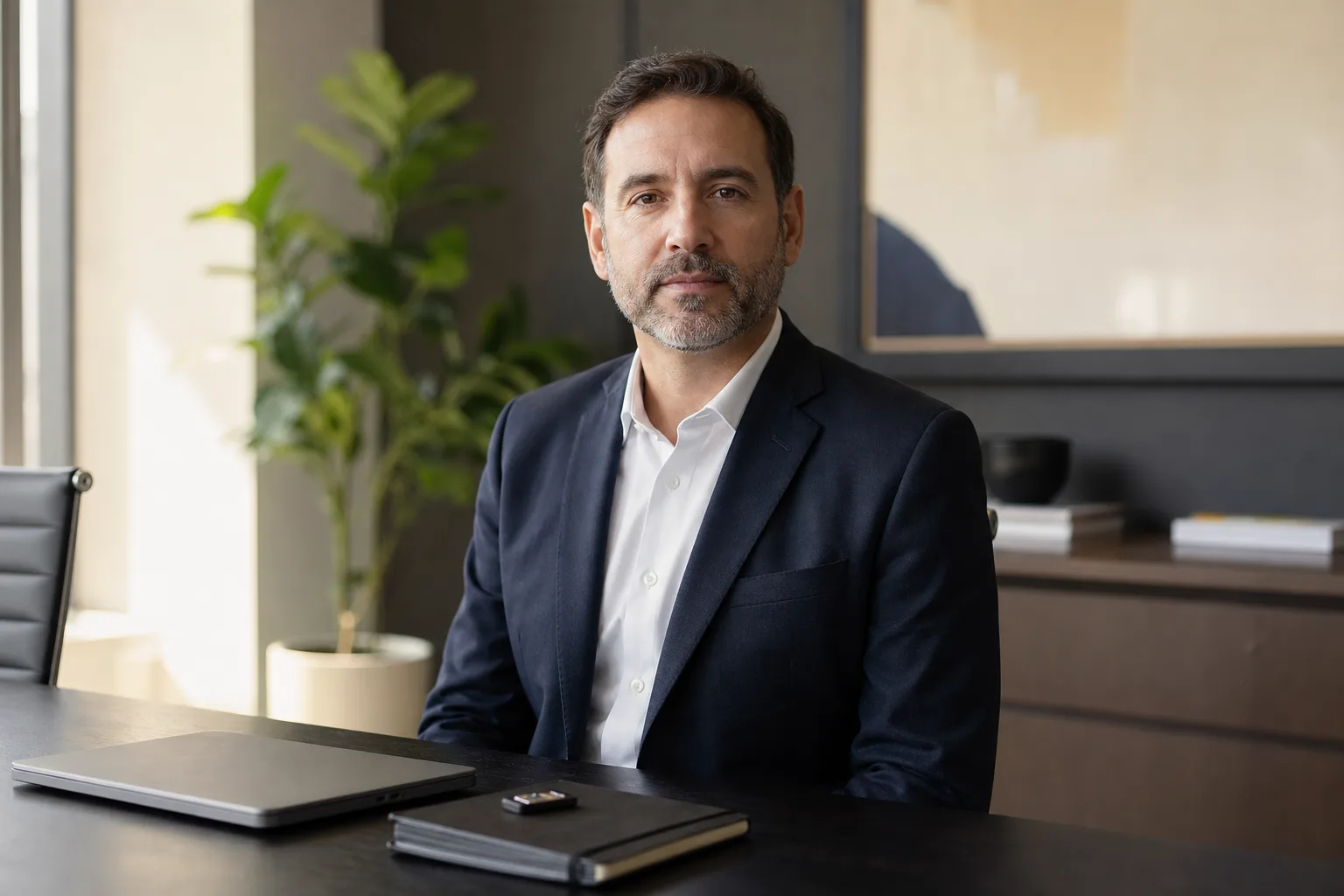
A strong cybersecurity consultant photo should not say “I am a hacker”. It should say: “I can protect, explain, and make calm decisions under pressure.” The client is buying risk reduction, not a dark-room movie mood. Your portrait needs to show control, clarity, and credibility in front of business leaders.
The visual trap is easy: black hoodie, code-filled screen, blue neon, severe gaze, bunker-like setting. These cues look “cyber”, but they rarely reassure a board member, CIO, legal team, or compliance lead. To sell trust, you need to step out of the folklore.
Why should cybersecurity look like risk management?
The NIST Cybersecurity Framework 2.0 structures cybersecurity around six functions: govern, identify, protect, detect, respond, and recover. That is a risk-management language, not a hacker poster. Your photo should follow the same logic.
A decision-maker is not only looking for someone who can find a vulnerability. They want someone who can prioritize, translate technical risk, define responsibilities, discuss budget, and support hard decisions after an incident. If your photo only shows an isolated technician in the dark, it reduces your role to the keyboard. If it shows a calm, readable, available professional, it prepares a better conversation.
What should a client understand from your portrait?
Your portrait should communicate three things without a caption.
You are technical, but not trapped inside the technical layer
One cue is enough: closed laptop, security key, notebook, meeting room, clean office background. You do not need a screen full of green lines. Cyber expertise looks more credible when it is controlled than when it is overstated.
You can speak to non-specialists
A cybersecurity consultant often works between technical teams, leadership, legal, business units, and outside vendors. ENISA describes cybersecurity as a set of roles, missions, knowledge, and skills that need a common language. Visually, that calls for an open posture: direct gaze, calm expression, clean outfit, readable background.
You can support a decision
An audit, incident-response mission, or compliance project requires trust. The face should be human enough to open the relationship and structured enough to signal method. The balance is subtle: approachable without becoming casual, serious without becoming cold.
Which visual codes avoid the hacker cliché?
The effective cybersecurity photo works against three reflexes.
| Visual reflex | Why it weakens trust | Stronger alternative |
|---|---|---|
| Dark room, blue neon, hoodie | feels hostile or adolescent | natural light, sober office, composed posture |
| Code screen in the background | suggests everything happens at keyboard level | closed laptop, notebook, meeting context, advisory setting |
| Hard face and crossed arms | creates distance when the topic already feels risky | direct gaze, calm face, relaxed shoulders |
| Over-finance suit | can feel false for a deeply technical profile | simple blazer, shirt, fine knit, or clean smart-casual outfit |
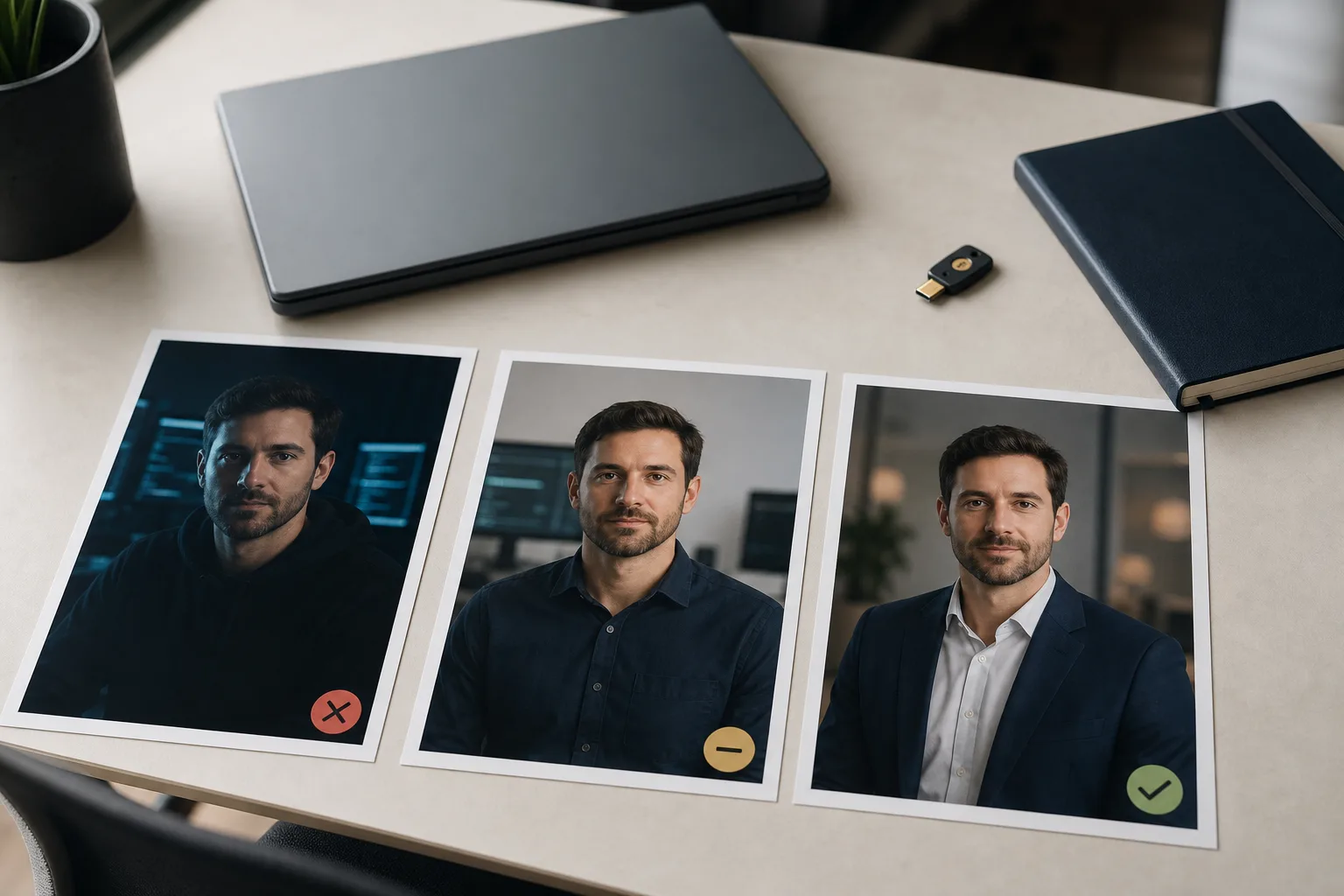
The right register depends on your buyer. For an SME, the photo should say “I will make this clear”. For an enterprise account, it should also say “I understand frameworks and trade-offs”. For a startup, it can stay slightly more technical, but not theatrical.
Where does this photo need to stay consistent?
LinkedIn explains that adding a profile photo increases profile credibility because people can see who you are when you send invitations. For a cybersecurity expert, that credibility often starts before the first message: the prospect sees the face, title, experience, then decides whether the contact feels serious.
Proposal or audit document
When your portrait appears again in a proposal, it should not create a different character. The same visual direction should connect LinkedIn, your email signature, your team page, and the PDF. Think of it like a visual identity system: if every surface changes style, trust fragments.
Conference, podcast, webinar
Cybersecurity experts often speak publicly. A photo that is too dark becomes unreadable in an event thumbnail. A photo that is too corporate becomes interchangeable. The right framing keeps the face clear even at small size, with a background that does not compete with the session title.
How should the photo change by cybersecurity profile?
GRC, compliance, ISO, NIS2 consultant
You sell method. Choose clear light, a structured outfit, and a meeting-room or office environment. The message: governance, framing, dialogue with business teams.
Pentester or offensive security expert
You can keep a slightly stronger technical signal, but avoid caricature. A blurred workstation background works. Avoid the clandestine look: you are an authorized professional, not a threat.
Fractional CISO or cybersecurity manager
The portrait should show responsibility. Stable framing, sober blazer, composed expression, calm setting. The message: prioritization, trade-offs, communication under pressure.
Freelance cybersecurity consultant
You need to reassure faster because there is not always a consulting-firm brand behind you. Avoid two extremes: too much lone-geek energy or too generic a consultant look. Aim for the zone where your expertise remains visible and the client can already imagine you in a meeting.
What is the ethical limit with an AI-generated photo?
AI can clean up a background, harmonize light, make a portrait more readable, and test different levels of formality. It should not invent a clearance, a badge, a crisis room, a data center, or a setting that implies a mission you never performed.
The rule is simple: improve presentation, not reality. If the portrait makes you unrecognizable, changes your age too much, adds an overly dominant posture, or creates misleading context, it weakens the trust it was meant to build.
Quick photo brief for a cybersecurity consultant
- Face recognizable and sharp in thumbnail size.
- Clear light, no cinematic cyber effect.
- Professional background, not decorative set dressing.
- One discreet job cue: laptop, notebook, security key, meeting room.
- Outfit aligned with your clients, not with a job stereotype.
- Calm, available, focused expression.
- Same visual direction across LinkedIn, website, proposal, and speaking assets.
If you want to test a more credible version without reshooting everything, you can upload a photo and generate a professional portrait with a sober brief: cybersecurity expert, natural light, calm office background, zero hacker cliché.
FAQ
Should a cybersecurity expert smile in a profile photo?
Yes, slightly. The smile should not turn the photo into a sales portrait. It should simply open the relationship and reduce the distance created by an anxiety-heavy topic.
Is a background with screens and code a good idea?
Only if the code stays blurred and secondary. If the screen becomes more important than the face, the photo talks about computers instead of trust.
Suit or casual outfit for a cybersecurity consultant?
It depends on the client. Enterprise audit, regulatory work, or executive committee: sober blazer. Startup, technical team, or offensive security mission: simpler clothing, but clean and deliberate. Consistency matters more than formality.
Can an AI photo work for a cybersecurity profile?
Yes, if it stays faithful to your real appearance and avoids misleading environments. It should improve professional readability, not manufacture artificial authority.
Sources
Read next.
photo-developpeur-freelance
Freelance developer photo: look credible on GitHub and LinkedIn
GitHub, LinkedIn, portfolio: the right freelance developer photo should signal reliability, clarity, and collaboration, not a staged tech persona.
creative-freelance-photo
Creative freelance photo: signalling your style
AD, motion designer, graphic designer: your photo must show your style without falling into the creative cliché. Method and concrete examples by trade.
interior-designer
Interior designer photo: show the method, not just the decor
Portfolio, LinkedIn, client proposal: how interior architects and designers can choose a photo that builds trust without looking like a furniture ad.