ai-consultant-photo · 7 min
AI consultant profile photo: build trust without robot clichés
LinkedIn, proposals, speaker bios: an AI consultant photo should show method, clarity and responsibility, not empty futuristic decoration.
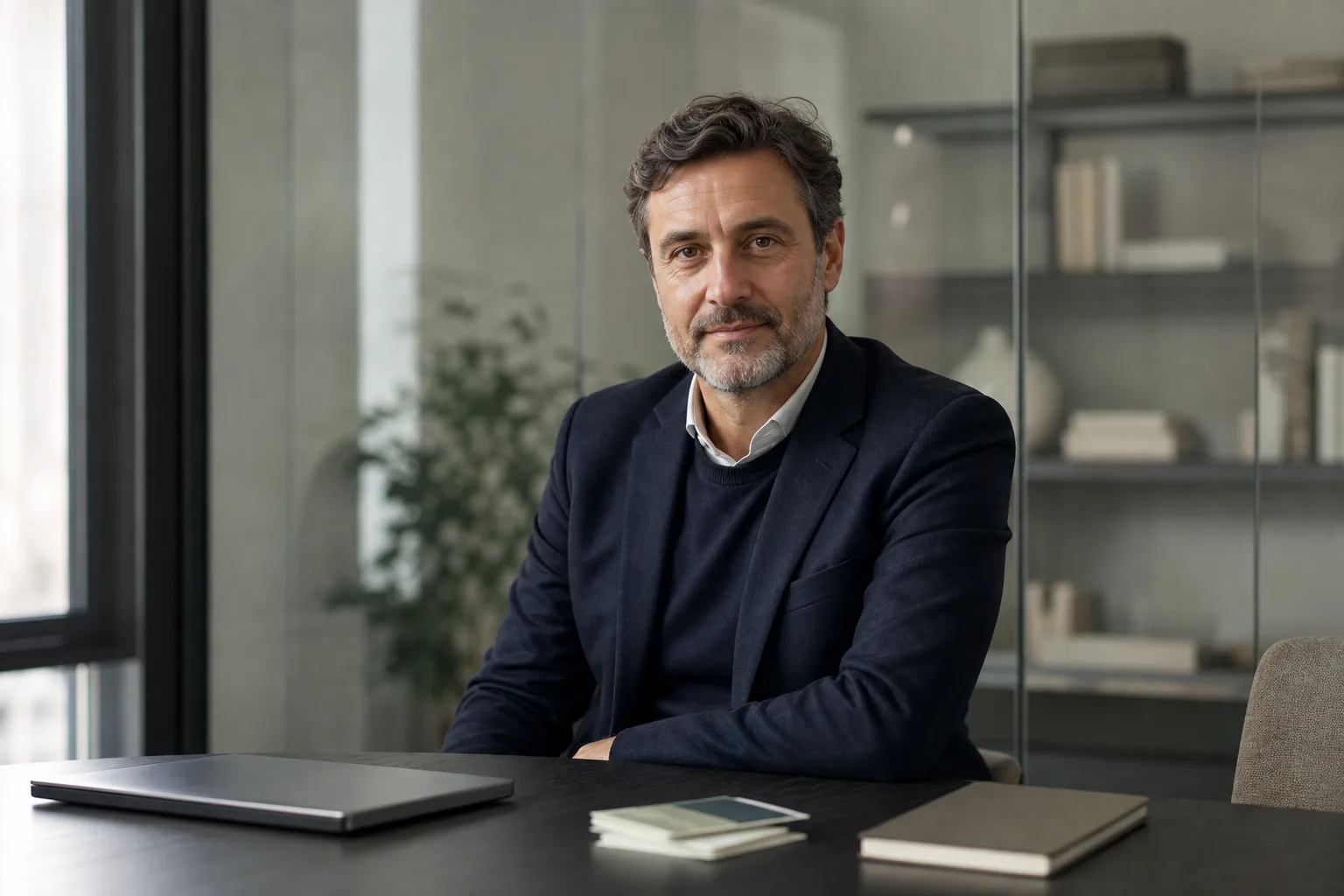
A strong AI consultant photo should not say "I know prompts". It should say: "I can make AI understandable, useful and governable". Clients are not looking for a futuristic set. They are looking for someone who can turn a technical topic into decisions, use cases, limits and responsibilities.
The visual trap is obvious: white robot, blue neon, digital brain, sci-fi glasses, unreadable diagrams. These signs feel "AI", but they quickly look generic. On LinkedIn, a consultancy page or a proposal, they often hide the real value of the role: framing.
LinkedIn Help notes that a profile photo supports credibility because it lets people see who is reaching out. For an AI consultant, that matters: before trusting an automation claim, a prospect first looks for a reliable human face.
Why should an AI consultant photo show method before technology?
The NIST AI Risk Management Framework describes trustworthy AI through characteristics such as validity, safety, resilience, transparency, explainability, privacy enhancement and bias management. For an AI consultant, that changes the portrait brief. The goal is not to look "more AI" than everyone else. The goal is to make a method visible.
A decision-maker viewing your profile wants to know whether you can choose a useful case, frame risks, speak with business teams, explain limits and avoid magical claims. The photo should therefore suggest clarity, not spectacle. A calm office, a closed laptop, clean light and an available gaze often say more than a high-tech background.
Which visual signals make AI expertise credible?
A decision environment, not an imaginary lab
Most serious AI work starts with workshops, prioritization, existing data and business constraints. A meeting room, strategy desk or project space therefore works better than a science-fiction set. It gives the prospect a simple mental scene: "this person can help us frame a complex subject".
A teaching expression
An AI consultant has to reassure without talking down to the client. The gaze can be direct, the expression calm, the smile light. Too much intensity suggests guru energy. Too much casualness suggests unframed experimentation. The right register is an expert who can explain without dominating.
Discreet work cues
A notebook, a closed laptop, neutral workshop cards, a blurred board with no readable text: that is enough. These elements suggest method without pretending to prove anything. Fake dashboards, tool logos, illegible diagrams and server-room backgrounds feel like decoration.
Which visual clichés should you avoid?
| Visual cliché | What it says despite you | More credible alternative |
|---|---|---|
| Robot, glowing brain, blue circuits | "I sell the AI fantasy" | calm office, natural light, human presence |
| Screen full of prompts or code | "The topic is technical and closed" | closed laptop, notebook, workshop context |
| Messianic speaker pose | "I overplay authority" | calm gaze, settled posture, clean framing |
| Ultra-luxury suit | "I sell generic consulting" | outfit aligned with clients and mission |
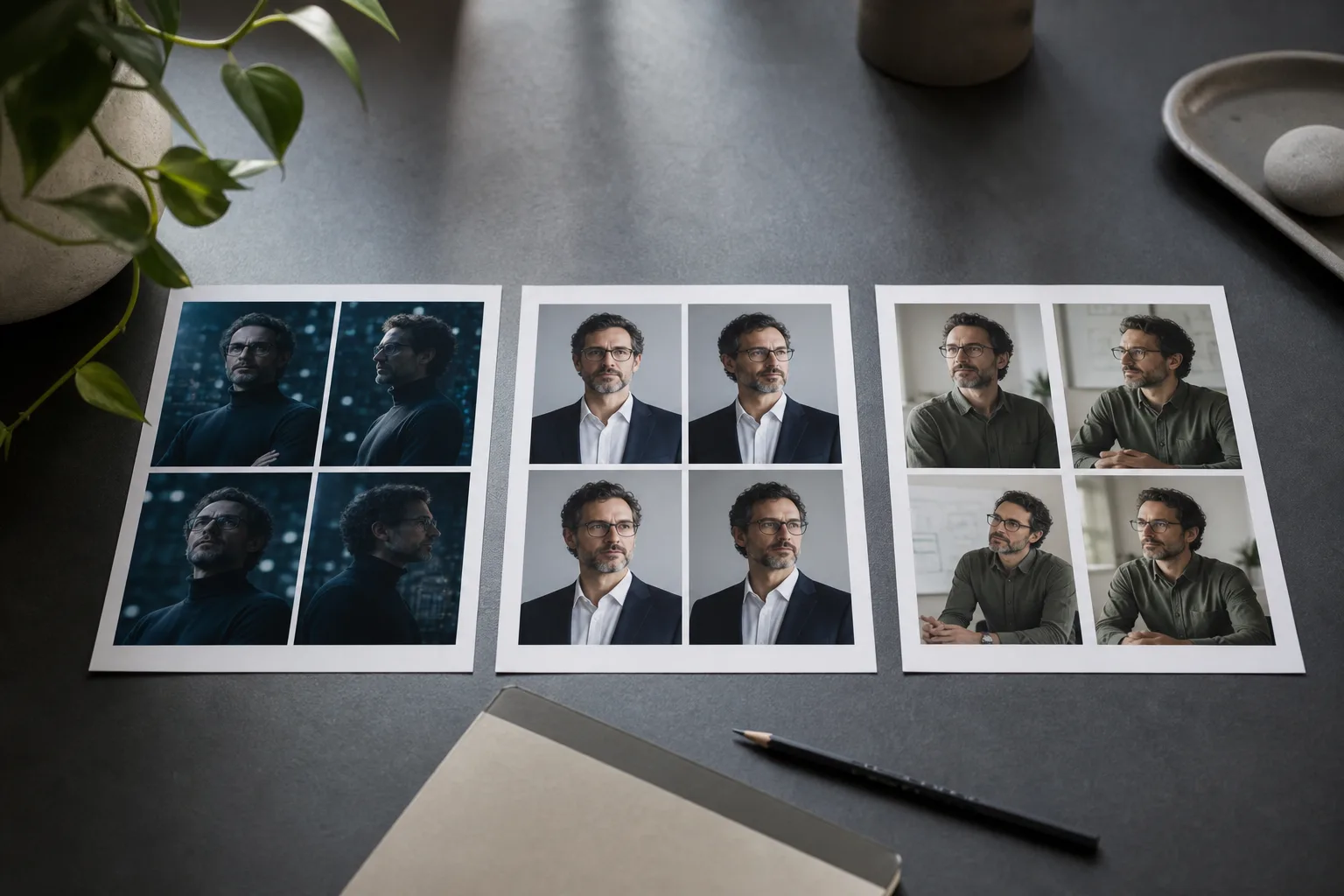
How should the photo change by AI consulting mission?
AI strategy consultant
You help leadership decide where AI makes sense. The photo should signal judgment: stable framing, clear office, structured outfit, thoughtful expression. Avoid looking too technical if your main audience is an executive team, business leader or founder.
Automation and productivity consultant
You work on processes, tools and operational gains. The photo can feel closer to real work: project space, computer, notebook, active desk. But it still needs discipline. The message is not "I test tools"; it is "I simplify a workflow".
Data, governance or AI compliance consultant
Your work touches data, risks and responsibilities. In Europe, the AI Act includes an AI literacy requirement for providers and deployers of AI systems. The photo should therefore avoid magical promises. It should suggest rigor, pedagogy and a clear sense of limits.
AI trainer or speaker
Here the photo must stay readable on event pages. A background that is too dark or too busy quickly disappears beside a talk title. Favor a clear face, open light and a style that also works on LinkedIn, a speaker bio and a training deck.
What is the ethical limit with an AI-generated photo?
An AI photo can improve lighting, background, framing and visual consistency. It should not invent authority. No fake lab badge, no control room, no partner-company logo, no setting that suggests a confidential mission, no face altered so much that it no longer looks like you.
The practical rule is simple: improve legibility, not reality. If your portrait gives you a status, expertise or experience you do not have, it damages the trust it was supposed to create. For an AI consultant, this is even more sensitive because the market is already full of promises. Your image should be the first proof of sobriety.
Quick photo brief for an AI consultant
- Recognizable face, readable as a LinkedIn thumbnail.
- Natural or soft studio light, no futuristic effect.
- Calm professional background: office, project room, workshop space.
- One method cue only: notebook, closed laptop, neutral cards.
- Outfit aligned with your clients: leadership, SMB, startup, public sector.
- Teaching expression: calm, available, focused.
- No readable text, logo, badge, robot or fake dashboard.
- Same visual direction across LinkedIn, website, proposal and speaker bio.
If your current photo feels too casual, dated or tied to the AI-tool hype cycle, you can upload a photo and generate a professional portrait with a sober brief: AI consultant, natural light, clear meeting room, teaching posture, no futuristic cliché.
FAQ
Should an AI consultant show a computer in the photo?
Yes, but the computer should not become the subject. A closed or softly blurred laptop is enough to signal context. If the screen pulls more attention than the face, the photo speaks about the machine instead of trust.
Is a futuristic background a good idea?
Rarely. A futuristic background may catch the eye, but it quickly makes the portrait interchangeable. For B2B work, clear light and a decision-making environment are usually more credible.
How do you look expert without sounding like a buzzword seller?
Avoid literal signals: robots, circuits, visible "AI" text, prompts on screen. Show the posture instead: calm, method, pedagogy and consistency between the photo, LinkedIn headline and mission promise.
Can an AI-generated photo work for an AI consultant?
Yes, if it stays faithful to your real face and actual work. It can test several levels of formality. It should not fabricate a setting, certification or authority you do not have.
Sources
Read next.
photo-developpeur-freelance
Freelance developer photo: look credible on GitHub and LinkedIn
GitHub, LinkedIn, portfolio: the right freelance developer photo should signal reliability, clarity, and collaboration, not a staged tech persona.
creative-freelance-photo
Creative freelance photo: signalling your style
AD, motion designer, graphic designer: your photo must show your style without falling into the creative cliché. Method and concrete examples by trade.
interior-designer
Interior designer photo: show the method, not just the decor
Portfolio, LinkedIn, client proposal: how interior architects and designers can choose a photo that builds trust without looking like a furniture ad.